Saltwater vs Chlorine Pool: A Builder's Honest Tradeoffs
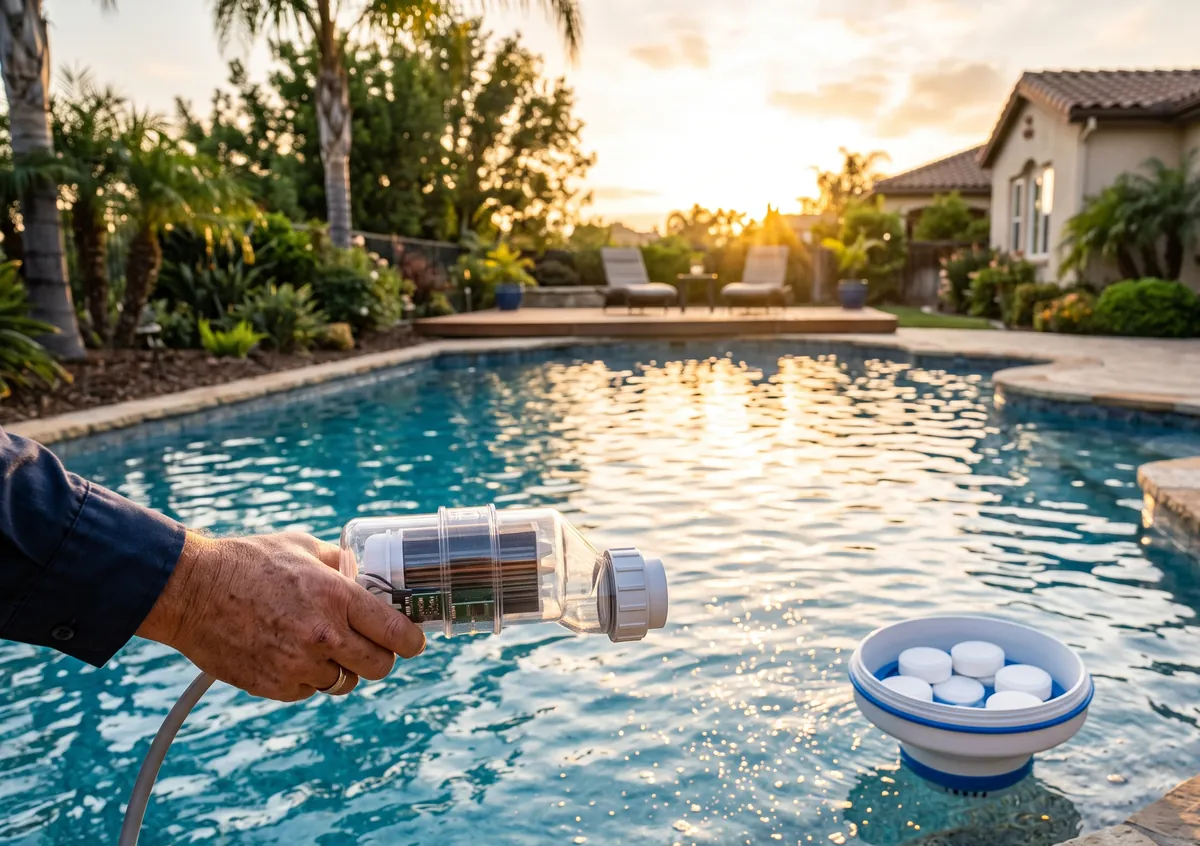
Saltwater vs chlorine pool: a saltwater pool is still a chlorine pool. The salt system just makes the chlorine for you instead of you adding it by hand. Salt costs more upfront and replaces a cell every few years; traditional chlorine is cheaper to install but means more handling and storage. Neither is "chemical-free," and the right pick depends on how hands-on you want to be.
Seventeen years building pools, and the salt-versus-chlorine question comes up at almost every consultation, usually with a misconception attached. Someone read that saltwater pools have "no chemicals," or that salt water is rough on everything it touches, or that it's basically the ocean. Most of that is half-true at best. Let me give you the straight version so you can decide based on how your pool will actually behave, not on a marketing line.
How a Salt System Actually Works
This is the part everyone gets wrong, so I lead with it. A saltwater pool is not chlorine-free. You add salt to the water, and a device called a salt chlorine generator (the cell) runs that salty water across charged metal plates. That process, electrolysis, splits the salt and produces chlorine right there in the line. The chlorine sanitizes your pool exactly like the chlorine from a bucket of tablets would.
So the chlorine is the same. The difference is the delivery. With salt, the system drip-feeds a steady, gentle stream of chlorine automatically. With traditional chlorine, you're adding it yourself: tablets in a floater or feeder, or liquid by hand. Same sanitizer, different way of getting it into the water. Anyone who tells you a salt pool is "all natural" is selling, not explaining.
Upfront Cost: Salt Costs More to Install
The salt system is hardware you have to buy and install, so it carries a real upfront premium.
| Item | Saltwater | Traditional chlorine |
|---|---|---|
| Equipment to install | $1,800 to $3,500 (cell + control board) | ~$0 to $100 (a floater or feeder) |
| Initial salt | $50 to $150 | n/a |
| First-year sanitizer | minimal | $200 to $500 in tablets/liquid |
On a new build, adding salt is a $1,800 to $3,500 line item for the generator and controller. A traditional chlorine setup needs almost nothing beyond a $20 floating dispenser. So out of the gate, chlorine is cheaper. People assume salt saves money immediately, and it doesn't. It saves later, maybe, if you keep the pool long enough.
Ongoing Cost: Where It Gets Interesting
Day to day, salt is cheaper to run. You buy bags of salt occasionally instead of a steady stream of chlorine tablets, and salt is dirt cheap by comparison. Figure $50 to $150 a year in salt versus $200 to $500 a year in chlorine for a traditional pool.
But there's a catch that the salt-saves-money crowd skips: the cell wears out. The metal plates inside the generator degrade as they make chlorine, and a salt cell lasts roughly 3 to 7 years before it needs replacing. A replacement cell runs $300 to $900. So when you do the real math, salt's chemical savings get partly eaten by the cell you replace every few years.
Here's the honest long-run picture. Salt usually does come out a little cheaper over many years, but the gap is smaller than people think once you count the cell. If saving money is your only reason for going salt, the case is weaker than the sales pitch. For where this fits in total pool cost, see my pool maintenance cost breakdown.
Skin Feel and the Swimming Experience
This is where salt genuinely shines, and it's the reason I'd pick it for my own family pool. Saltwater pools feel softer and gentler on skin and eyes. The salinity is low, far below ocean water, more like a tear, so it's not salty-tasting, but that mild salinity plus the steady, lower chlorine level means less of the harsh, red-eyed, dried-out-skin feeling you get from a pool that just got hit with a big slug of chlorine.
A salt pool maintains a more consistent chlorine level than hand-dosing does, and consistency is comfort. No chlorine spikes after you dump in tablets, no swimming in flat water that's gone under-sanitized between doses. For families with kids in the water a lot, or anyone with sensitive skin, this is a real, daily quality-of-life difference.
Maintenance: Salt Is Easier Day to Day, Not Maintenance-Free
Salt automates the chlorine, so day to day there's less for you to do. You're not handling tablets or pouring liquid chlorine every few days. The system makes chlorine on a schedule, you keep the salt level topped up, and you're hands-off more of the time.
That said, "easier" is not "ignore it." You still have to balance the rest of the water: pH, alkalinity, stabilizer, and especially the salt level itself. Salt systems actually demand attention to chemistry because the cell needs proper conditions to work and to last. You'll also clean calcium scale off the cell periodically. So test your water either way. A good pool water test kit is non-negotiable on a salt pool, and many owners keep salt test strips on hand specifically to watch the salinity. Let the salt drift too high or low and the cell either underperforms or wears out faster.
When you do need to top up, buy pool salt made for chlorine generators, not your driveway de-icer, and keep a spare or replacement salt chlorinator cell in mind as a planned expense, not a surprise one.
Corrosion: The Real Drawback to Respect
This is the legitimate knock on salt, and I won't soften it. Salt water, even at low concentration, is more corrosive over time than fresh water. Over years it can wear on certain materials:
- Metal fixtures, ladders, and handrails: quality stainless holds up; cheaper metal pits.
- Some natural stone coping and certain pavers: salt can degrade softer stone over many seasons.
- Heaters and equipment: salt-rated equipment exists and matters. Don't pair a salt system with bargain components.
- Underwater light niches and certain fittings: worth using salt-compatible hardware.
None of this means salt destroys a pool. It means a salt pool should be built and equipped with salt in mind: salt-rated heater, quality stainless, salt-friendly coping. If you're choosing salt on a new build, tell your builder up front so they spec the right materials. On gunite specifically, the structure is fine; it's the metal and stone trim to think about. My gunite vs fiberglass vs vinyl guide touches on how surface type interacts with this.
Converting an Existing Chlorine Pool to Salt
Plenty of owners convert later, and it's straightforward. You're adding a salt cell and control unit to your existing equipment pad and dumping in salt. Conversion typically runs $1,800 to $3,500 installed, depending on your setup and whether your current equipment is salt-compatible. If your heater or fixtures aren't salt-rated and are near end of life anyway, factor replacing them into the decision. Converting is the same hardware cost as building salt in from the start, just done after the fact.
Saltwater vs Chlorine at a Glance
| Factor | Saltwater | Traditional chlorine |
|---|---|---|
| Sanitizer | Chlorine (generated on site) | Chlorine (added by hand) |
| Upfront cost | Higher ($1,800 to $3,500 system) | Lower (a $20 floater) |
| Ongoing chemical cost | Lower (cheap salt) | Higher (tablets/liquid) |
| Recurring big cost | Cell replacement, $300 to $900 every 3 to 7 yrs | None comparable |
| Skin and eye feel | Softer, more consistent | Harsher, more spikes |
| Daily effort | Less hands-on | More hands-on |
| Corrosion risk | Higher, needs salt-rated build | Lower |
| Water balancing still required | Yes | Yes |
The reason I keep stressing that both are chlorine pools isn't pedantry; it's because chlorine is what actually keeps swimmers from getting sick. Whether it comes from a cell or a bucket of tablets, you need free chlorine and pH held in the right range to kill germs, and the CDC healthy swimming pages lay out why those levels matter. A salt pool that drifts out of balance is no safer than a neglected chlorine one.
Frequently Asked Questions
Is a saltwater pool chlorine-free?
No. A saltwater pool is still a chlorine pool; the salt system just makes the chlorine for you. You add salt, and a generator runs that salty water across charged plates to produce chlorine right there in the line through electrolysis. The chlorine sanitizes exactly like chlorine from tablets would. Anyone who tells you a salt pool is chemical-free or all-natural is selling, not explaining.
Is a saltwater pool cheaper than a chlorine pool?
Day to day it's cheaper to run: figure $50 to $150 a year in salt versus $200 to $500 in chlorine tablets. But salt costs $1,800 to $3,500 more to install, and the cell wears out every 3 to 7 years at $300 to $900 a replacement. Salt usually comes out a little cheaper over many years, but the gap is smaller than people think once you count the cell.
How long does a salt cell last?
Roughly 3 to 7 years before it needs replacing, because the metal plates inside degrade as they make chlorine. A replacement cell runs $300 to $900. You can stretch a cell's life by keeping the salt level in range and cleaning calcium scale off it periodically; letting the salinity drift too high or low makes it wear out faster.
Is saltwater better for your skin than chlorine?
For most people, yes. Saltwater pools feel softer and gentler on skin and eyes because the salinity is low, more like a tear than the ocean, and the system maintains a steadier, lower chlorine level instead of the harsh spikes you get after dumping in tablets. For families with kids in the water a lot or anyone with sensitive skin, it's a real daily difference.
Does a saltwater pool cause corrosion?
It can, and this is the legitimate knock on salt. Even at low concentration, salt water is more corrosive over time than fresh water, and it can wear on cheaper metal fixtures, softer natural stone coping, and non-salt-rated equipment. It doesn't destroy a pool, but a salt pool should be built with salt in mind: salt-rated heater, quality stainless, salt-friendly coping. Tell your builder up front so they spec the right materials.
Can I convert my existing chlorine pool to salt?
Yes, and it's straightforward. You add a salt cell and control unit to your existing equipment pad and dump in salt, typically $1,800 to $3,500 installed depending on your setup. The one thing to check is whether your current heater and fixtures are salt-compatible; if they aren't and they're near end of life anyway, factor replacing them into the decision.
What This Means for You
If you want the softest-feeling water and the least day-to-day fuss, and you'll keep the pool long enough to justify the system, go salt, and build it with salt-rated materials from the start. If upfront budget is tight, you don't mind handling chlorine, or your pool has a lot of vulnerable metal and stone you don't want to re-spec, traditional chlorine is a perfectly good, cheaper-to-install choice. Both are chlorine pools. Both need you to test and balance the water. Neither is magic.
Whatever you pick, decide before you build so your builder specs the equipment and trim to match, because converting fixtures after the fact costs more than getting it right the first time. When you're ready, find a builder who'll talk salt-rated components honestly instead of upselling you a system into a pool that wasn't built for it, and builders, you can get listed to reach owners weighing this exact decision.