Fiberglass vs Gunite Pool (vs Vinyl): A Builder's Honest Take
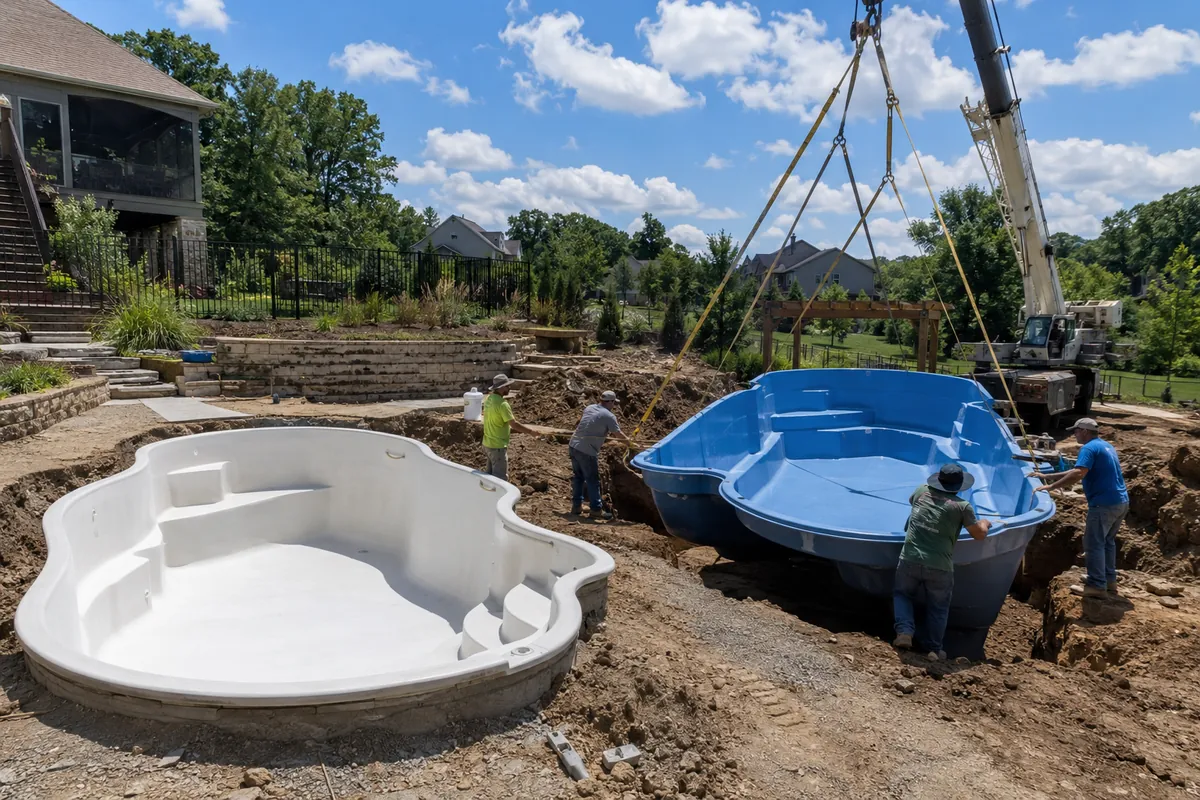
Fiberglass vs gunite pool: fiberglass is faster to install, smoother underfoot, and cheaper to maintain but limited in shape and size, while gunite costs more and takes longer but builds any shape you can draw and lasts the longest. Vinyl-liner sits below both on upfront price and pays for it with liner replacements down the road.
I've built all three for 17 years. I don't sell one type as the holy grail because I make money on whichever one fits your yard. What I do care about is matching the pool to the homeowner, because the wrong choice is a 30-year regret. Let me walk you through the real tradeoffs the way I'd explain them standing in your backyard.
The Three Types in One Table
Here's the honest head-to-head before we get into the why.
| Factor | Vinyl-liner | Fiberglass | Gunite / concrete |
|---|---|---|---|
| Typical built cost | $40k to $65k | $55k to $90k | $70k to $130k+ |
| Build time | 3 to 6 weeks | 2 to 5 weeks | 8 to 16 weeks |
| Structure lifespan | 20 to 35 yrs (walls) | 25 to 40 yrs | 50+ yrs |
| Surface replacement | Liner every 7 to 12 yrs | Gelcoat refresh ~15 to 20 yrs | Replaster every 10 to 15 yrs |
| Customization | Moderate | Limited (factory molds) | Unlimited |
| Surface feel | Smoothest | Smooth | Roughest (plaster) |
| Maintenance / chemicals | Low to moderate | Lowest | Highest |
| Resale appeal | Moderate | Good | Best |
For the full money picture including the extras nobody quotes, pair this with my inground pool cost breakdown.
Build Time: How Long Your Yard Is a Construction Site
This matters more than people expect, because a torn-up yard through a rainy spring is miserable.
- Fiberglass is the fastest. The shell is built in a factory and trucked to you. We dig, set the shell with a crane, plumb it, backfill, and pour a deck. I've set a fiberglass pool and had water in it inside two weeks when the weather cooperated.
- Vinyl is in the middle. We dig, set the wall panels and braces, run plumbing, pour a footing, then hang the liner and fill. Three to six weeks is normal.
- Gunite is the longest. Dig, steel cage, plumbing rough-in, shoot the gunite, then it cures, then tile and coping, then the deck, then plaster, then fill and start up. Each stage waits on the one before it, and weather stalls every step. Eight to sixteen weeks is realistic, longer if it rains.
If you want to swim this summer and you're reading this in May, fiberglass is often the only honest answer.
Cost: Upfront and Over 20 Years
Upfront, the table tells the story: vinyl cheapest, fiberglass middle, gunite priciest. But upfront isn't the whole bill.
Vinyl's low entry price comes with a recurring cost most homeowners forget. That liner doesn't last forever. Figure $3,500 to $6,000 for a replacement liner every 7 to 12 years, sooner if you let chemistry slide or a dog's claws get involved. Over 25 years that's two or three liner jobs.
Fiberglass has the lowest running cost. The smooth gelcoat resists algae, so you burn fewer chemicals, and there's no liner and no replaster. The gelcoat may want a refresh after 15 to 20 years, but that's it.
Gunite costs the most upfront and the most to run. The plaster surface is porous, which feeds algae and eats more chemicals, and you replaster every 10 to 15 years at $5,000 to $12,000. You pay for the freedom to build anything.
Lifespan and Repair
This is where I see a lot of bad information online, so let me be plain.
- Gunite lasts longest, structurally. A properly built gunite shell can go 50 years and beyond. The plaster on top is the wear item, not the structure. Repairs are very doable: you can patch, you can replaster, you can re-tile. Nothing about a gunite pool is unfixable.
- Fiberglass structure is durable but a crack or osmotic blistering in the gelcoat is a specialized repair. Most jobs are minor and cosmetic. A serious structural crack is rare but a bigger deal than a gunite patch.
- Vinyl is the easiest and cheapest to repair day to day. A torn liner near the surface can be patched. But the liner is a consumable, full stop. The steel or polymer walls behind it last decades; the liner doesn't.
Customization: Can You Build the Pool You Drew?
If you've got a vision board with a freeform lagoon, a vanishing edge, a tanning ledge wrapping into a spa, and a grotto, that's gunite. Period. Gunite is sprayed over a steel cage shaped however we want, so there's no shape, depth, or feature it can't do.
Fiberglass is the opposite. You're choosing from a manufacturer's catalog of molds. The selection in 2026 is genuinely good, with ledges and bench seats built in, but you cannot go past the biggest mold, which caps you around 16 feet wide and 40 feet long because the shell has to fit on a truck and under highway bridges. No custom depth, no custom shape.
Vinyl sits in between. We build the wall panels, so you get more shape freedom than fiberglass, including some custom geometry and depth, just not the sculptural anything-goes of gunite.
Surface Feel and the Swimming Experience
People underrate this until they swim. The plaster on a gunite pool is the roughest surface. It's fine on your feet but kids who push off the bottom can scuff their toes, and it gets rougher as it ages toward replaster. Fiberglass and vinyl are both smooth and easy on skin. Fiberglass in particular feels great underfoot.
Whatever surface you land on, keeping it nice is mostly about water chemistry. A reliable pool test kit is the cheapest insurance you'll buy, because balanced water is what keeps plaster from etching and liners from wrinkling.
Maintenance and Sanitizer
Fiberglass wins on maintenance, hands down. The non-porous gelcoat starves algae, so you use fewer chemicals and brush less. Gunite is the most work because plaster is porous and algae loves it, so you brush more and dose more. Vinyl is in the middle.
All three play fine with a saltwater system, with one caution: on gunite, salt is no issue, but be mindful of metal fixtures and certain stone coping, which can show wear from salt over many years. If you're weighing salt, read saltwater vs chlorine first. And no matter the type, a good robotic pool cleaner cuts your hands-on time more than any other single purchase.
Resale Value
Appraisers and buyers generally rank gunite highest because it reads as permanent and premium, especially in warm-climate markets where a pool is expected. Fiberglass resells well too, particularly given its low upkeep. Vinyl is fine but a buyer who knows pools will mentally subtract the cost of a liner that's due. None of this should be your only reason to pick a type, but if you might sell in ten years, factor it in.
When Each One Wins
Let me make it simple.
Choose fiberglass if you want in the water fast, you hate maintenance, a standard rectangle or kidney shape fits your plan, and your yard has crane access. It's my pick for the busy family that wants a pool, not a project.
Choose gunite if you want a specific custom shape, a vanishing edge or attached spa, a big or unusually deep pool, or the longest-lived, highest-resale option and you've got the budget and patience for a longer build.
Choose vinyl if upfront budget is the deciding factor and you accept the liner-replacement cycle as the trade. It's the honest entry point to pool ownership, and a well-built vinyl pool is a real pool, not a consolation prize.
Whatever shell you choose, the part that's non-negotiable is the barrier around it. Code in most places requires a compliant fence or safety cover regardless of pool type, and the CPSC pool safety guidance at PoolSafely.gov lays out the layers of protection that actually prevent drownings. Budget for it from day one, because it isn't optional and it isn't in most shell quotes.
Frequently Asked Questions
Which pool type lasts the longest?
A properly built gunite shell lasts the longest, structurally, often 50 years and beyond. Fiberglass shells run 25 to 40 years and vinyl walls 20 to 35, though the vinyl liner itself is a consumable you replace every 7 to 12 years. The thing to understand is that on every type there's a wear surface (plaster, gelcoat, liner) that ages faster than the structure underneath it.
What is the cheapest type of inground pool to install?
Vinyl-liner is the cheapest upfront, typically $40,000 to $65,000 for a standard build, followed by fiberglass and then gunite. But cheapest to install isn't cheapest to own. Vinyl's recurring liner replacement at $3,500 to $6,000 every 7 to 12 years closes a lot of that gap over 25 years, so weigh the lifetime number, not just the sticker.
Is fiberglass or gunite better for a saltwater pool?
Both work fine with salt. The pool shell itself isn't the concern on either type; the things salt wears on over time are metal fixtures, ladders, and certain stone coping. Spec salt-rated hardware and quality stainless on either shell and you're set. If salt is on your list, decide before you build so the trim gets specced to match.
Why does a gunite pool take so much longer to build?
Gunite is built in sequence on your site: dig, steel cage, plumbing, shoot the gunite, cure, tile and coping, deck, plaster, then fill and start up. Each stage waits on the one before it and weather stalls every step, so 8 to 16 weeks is realistic. Fiberglass is faster because the shell arrives finished from a factory and only needs to be set, plumbed, and backfilled.
Can you build any shape with fiberglass?
No. Fiberglass shells are pulled from a manufacturer's molds, so you choose from a catalog rather than drawing your own shape. The largest mold caps out around 16 feet wide by 40 feet long because the shell has to fit on a truck and under highway bridges. If you want a freeform lagoon, a vanishing edge, or a custom depth, that's gunite.
Which pool type is easiest to maintain?
Fiberglass, by a clear margin. Its non-porous gelcoat starves algae, so you use fewer chemicals and brush less. Gunite is the most work because plaster is porous and feeds algae, and vinyl sits in the middle. A robotic cleaner cuts hands-on time on any of them.
What This Means for You
Don't start from the type. Start from your yard, your budget over 20 years, your timeline, and how custom you actually need to be. Then the type usually picks itself. Get line-item quotes for the type you land on, and remember the pool is only part of the bill once you add fence, electrical, and deck.
Whatever you choose, hire it right. The build matters more than the material: a sloppy gunite job will outperform nothing, and a great fiberglass set beats a rushed concrete pour every time. My guide on how to choose a pool builder covers the vetting. When you're ready, browse builders near you, and builders, you can get listed to reach homeowners deciding right now.