Inground Pool Cost in 2026: Real Numbers From a Builder
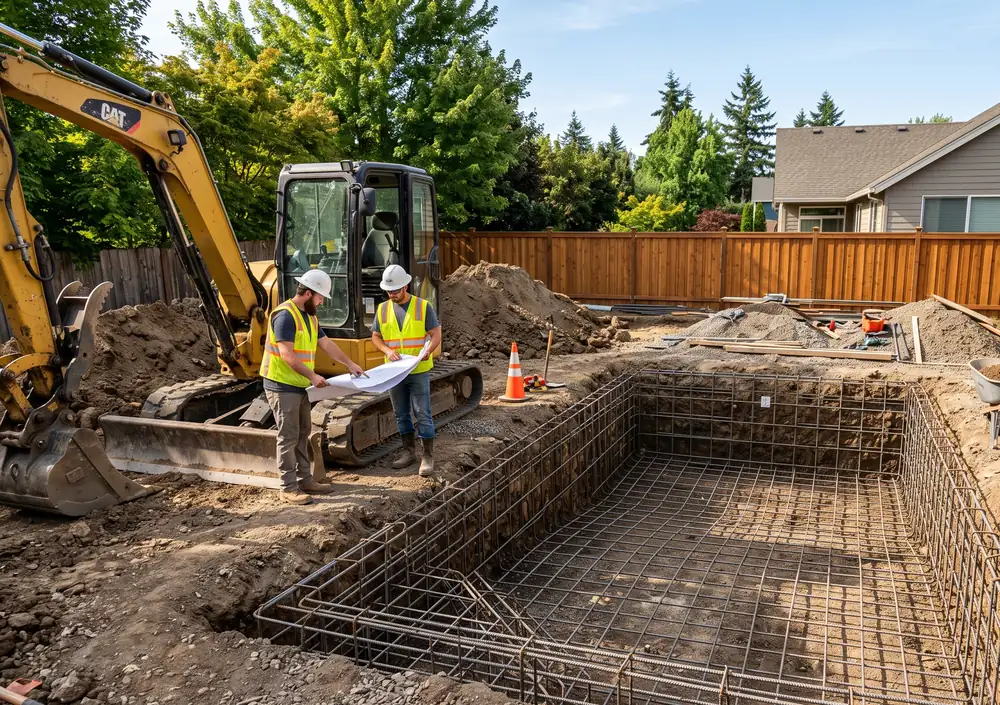
Inground pool cost: in most US markets in 2026, a finished inground pool runs from about $40,000 for a basic vinyl-liner build to $120,000 or more for a fully loaded gunite project, and the number on the contract is almost never the number you actually spend.
I've been building inground pools for 17 years. Gunite, fiberglass, vinyl-liner, all of it, plus the years I spent running the trades that show up after the hole is dug. In that time I've watched more budgets blow up over the stuff nobody quotes than over the pool itself. So this article does two things. It gives you honest ranges by type, size, and feature, and it shows you how a builder like me actually arrives at a price. If you understand the second part, you'll spot a lowball quote before it costs you.
One thing up front, and I'll repeat it because it matters: never hand a builder a giant deposit before a shovel hits dirt. Real money moves at milestones. More on that later.
What an Inground Pool Costs by Type in 2026
The single biggest swing in your price is which type of pool you build. Here's where the three main types land for a typical job in a mid-size market.
| Pool type | Typical total (built) | What you're paying for |
|---|---|---|
| Vinyl-liner | $40,000 to $65,000 | Lowest upfront, steel or polymer walls, liner you replace every 7 to 12 years |
| Fiberglass | $55,000 to $90,000 | Factory shell, fast install, smooth surface, limited shapes and sizes |
| Gunite / concrete | $70,000 to $130,000+ | Any shape, any size, longest life, highest cost and longest build |
Those are all-in ballparks for a standard residential pool with a basic deck and equipment, not a bare shell. I'll break down what moves you within each band below. If you want a deeper head-to-head on the materials themselves, I wrote a full gunite vs fiberglass vs vinyl breakdown that gets into lifespan and repair.
Size Changes Everything
People fixate on type and forget that size is a multiplier on top of it. A pool is priced by surface area and water volume, and both scale fast.
- Small (under 300 sq ft, plunge or cocktail pool): often 20 to 30 percent below the ranges above. Great for tight lots.
- Standard (300 to 500 sq ft, a 14x28 to 16x32): this is the baseline my ranges assume.
- Large (500+ sq ft, 18x36 and up): add 25 to 50 percent. More concrete, more steel, more water to heat and treat for the next 30 years.
Bigger isn't just a bigger build cost. It's a bigger forever cost. A pool with 30,000 gallons instead of 18,000 costs more to heat, more to fill, more to keep balanced, and more to clean. Even the everyday gear scales: a bigger pool wants a more capable robotic pool cleaner to keep up. Look at the pool maintenance cost breakdown before you size up on a whim.
Site Access and Excavation: The Wildcard
This is the line item that surprises homeowners more than any other, and it's the one a glossy render never shows.
To dig a pool I need to get an excavator into your backyard. If you've got a wide side yard with no slope, easy. If your only access is a 4-foot gate between two houses, or your yard sits on a hill, or there's rock under the topsoil, the price moves hard.
Real things that drive excavation cost:
- Tight access. No room for a standard excavator means a smaller machine and more hours, or hauling dirt by hand or conveyor. I've seen this add $5,000 to $15,000.
- Rock. Hit limestone or granite and you're renting a hammer rig or, worst case, blasting. This can add $10,000+ and there's no way to know for certain until we dig.
- High water table. Water filling the hole means dewatering pumps running for days.
- Hauling spoils. That dirt has to go somewhere. Trucking it off-site costs real money, especially in cities.
A good builder walks your yard and tells you honestly that excavation is the part with the most unknowns. A bad one quotes you a clean flat number and then hits you with a change order the day they hit rock.
Decking, Coping, and the Stuff Around the Water
The pool is a hole full of water. The deck is what you actually live on, and it's a major cost most first quotes shortchange.
- Basic broom-finish concrete deck: $8 to $15 per sq ft.
- Stamped or colored concrete: $15 to $25 per sq ft.
- Pavers: $20 to $40 per sq ft.
- Travertine or natural stone: $30 to $50+ per sq ft.
A modest 600 sq ft deck in stamped concrete is $9,000 to $15,000 by itself. Coping, the cap around the pool edge, is separate again. When a quote looks cheap, the deck is usually where they cut it to the bone.
Features: Where the Number Climbs
Every feature is optional, and every feature adds up. Here's roughly what the common ones run installed.
| Feature | Typical added cost |
|---|---|
| Gas or heat-pump heater | $3,500 to $8,000 |
| LED pool and landscape lighting | $1,500 to $4,000 |
| Automation (app control, scheduling) | $2,000 to $5,000 |
| Saltwater chlorine system | $1,800 to $3,500 |
| Spa / attached hot tub | $12,000 to $25,000 |
| Tanning ledge / sun shelf | $3,000 to $6,000 |
| Water features (sheers, bubblers) | $2,000 to $8,000 |
On the salt question specifically, run the numbers before you assume it's cheaper long-term. I broke down the real math in saltwater vs chlorine, because the salt cell you replace every few years isn't free.
One feature I'd never skip is the one that costs almost nothing: a way to keep the water balanced from day one. A simple pool water test kit protects the expensive surface you just paid for, and it's the cheapest line item on this whole page.
Permits, Inspections, and Engineering
Every legitimate inground pool needs permits, and in most jurisdictions an inspection or several. Budget $500 to $3,000 depending on your city, and more if you need a soils report or structural engineering on a slope. Whoever you hire should pull these permits in their name, not yours. If a builder asks you to pull your own owner-builder permit, that's a flag I cover in how to choose a pool builder.
The Forgotten Extras That Blow the Budget
Here's the part I wish every homeowner heard before signing. The pool quote is rarely the whole project. These extras are almost always separate, and they're the reason a $65,000 pool becomes an $85,000 backyard.
- Fencing. Code almost everywhere requires a barrier around a pool. A proper fence is $3,000 to $10,000 depending on length and material. This is not optional and it's not in most pool quotes.
- Electrical. A pool needs a sub-panel, bonding, and dedicated circuits for the pump, heater, and lights. A licensed electrician runs $2,000 to $6,000. Bonding is a safety code item, not a nicety.
- Landscaping and repair. Heavy equipment tears up a yard. Re-grading, sod, irrigation repair, and plantings to hide equipment easily run $3,000 to $15,000.
- Gas line. A gas heater needs a line sized for it. Running new gas can be $1,000 to $4,000.
- Drainage. Pools change how water moves across your lot. Sometimes you need new drains so you're not flooding a neighbor.
Add those up and you can be $15,000 to $30,000 past the pool number. A builder who pretends these don't exist is setting you up. Ask, in writing, exactly what is and is not included.
How Builders Actually Price a Pool
Since you asked, here's roughly how I build a number, so you can read a quote like I do.
- Shell cost: materials and labor for the structure itself. Steel, gunite or shell, plumbing, the surface finish.
- Excavation estimate: based on access and a soil guess, with an honest note that rock is a risk.
- Equipment package: pump, filter, heater, sanitizer, plus the automation tier you chose.
- Decking and coping: square footage times the finish you picked.
- Overhead and margin: my crews, insurance, warranty reserve, and yes, profit. A builder with no margin can't honor a warranty in year three.
- Allowances for unknowns: the honest builders flag these instead of hiding them.
When two quotes are $20,000 apart, it's almost always because one of them quietly thinned the deck, dropped the heater, or assumed easy dirt. Compare line by line, not bottom line to bottom line.
One cost I listed that homeowners try to cut and never should is the barrier. A code-compliant fence or safety cover is required almost everywhere a pool exists, and it's a safety item before it's a budget item. The CPSC pool safety guidance at PoolSafely.gov explains why the barrier matters and what compliant protection looks like. Build it into the $3,000 to $10,000 line from the start instead of treating it as an afterthought.
Frequently Asked Questions
How much does an inground pool cost in 2026?
In most US markets a finished inground pool runs from about $40,000 for a basic vinyl-liner build to $120,000 or more for a fully loaded gunite project. Vinyl-liner typically lands at $40,000 to $65,000, fiberglass at $55,000 to $90,000, and gunite at $70,000 to $130,000-plus. Those are all-in ballparks with a basic deck and equipment, not a bare shell.
Why is my pool quote higher than the base price I read online?
Because the pool quote is rarely the whole project. Fencing, electrical, gas line, landscaping repair, and drainage are almost always separate, and together they can add $15,000 to $30,000 on top of the pool number. A $65,000 pool quietly becomes an $85,000 backyard. Always ask, in writing, exactly what is and isn't included.
What part of pool construction costs are hardest to predict?
Excavation, by far. Tight site access can add $5,000 to $15,000, and hitting rock like limestone or granite can add $10,000 or more with no way to know for certain until we dig. A good builder walks your yard and tells you honestly that excavation carries the most unknowns; a bad one quotes a clean flat number and surprises you with a change order the day they hit rock.
How much should I budget beyond the pool itself?
For a standard 2026 build, plan on the pool quote plus another 20 to 30 percent for fence, electrical, gas, and landscaping. If you've got $80,000 to spend, shop a $60,000 pool, not an $80,000 one, so the extras don't push you over. Budgeting for the full project instead of just the pool is the single best way to avoid a nasty surprise.
Does pool size really change the price that much?
Yes, because a pool is priced by surface area and water volume and both scale fast. A small plunge pool can run 20 to 30 percent below standard ranges, while a large 18x36-and-up pool adds 25 to 50 percent. And size is a forever cost, not just a build cost: more gallons means more to heat, fill, balance, and clean for the next 30 years.
How much do permits and inspections cost for a pool?
Budget $500 to $3,000 for permits and inspections in most jurisdictions, and more if you need a soils report or structural engineering on a slope. Whoever you hire should pull these permits in their name, not yours. A builder who asks you to pull your own owner-builder permit is waving a red flag.
What This Means for You
Budget for the full project, not the pool. For a standard build in 2026, I tell homeowners to plan on the pool quote plus another 20 to 30 percent for fence, electrical, gas, and landscaping. If you've got $80,000 to spend, shop a $60,000 pool, not an $80,000 one.
Then protect yourself on payment. Tie money to milestones: dig, steel, gunite or shell set, deck, plaster, fill. Never a big upfront deposit on a render and a handshake. I've cleaned up too many half-dug holes left through a rainy spring by an outfit that took the deposit and vanished.
When you're ready to get real numbers, get three line-item quotes from licensed, insured, local builders. You can browse builders in our directory to start, and if you're a builder reading this, you can get listed so the homeowners pricing a pool right now can find you.